
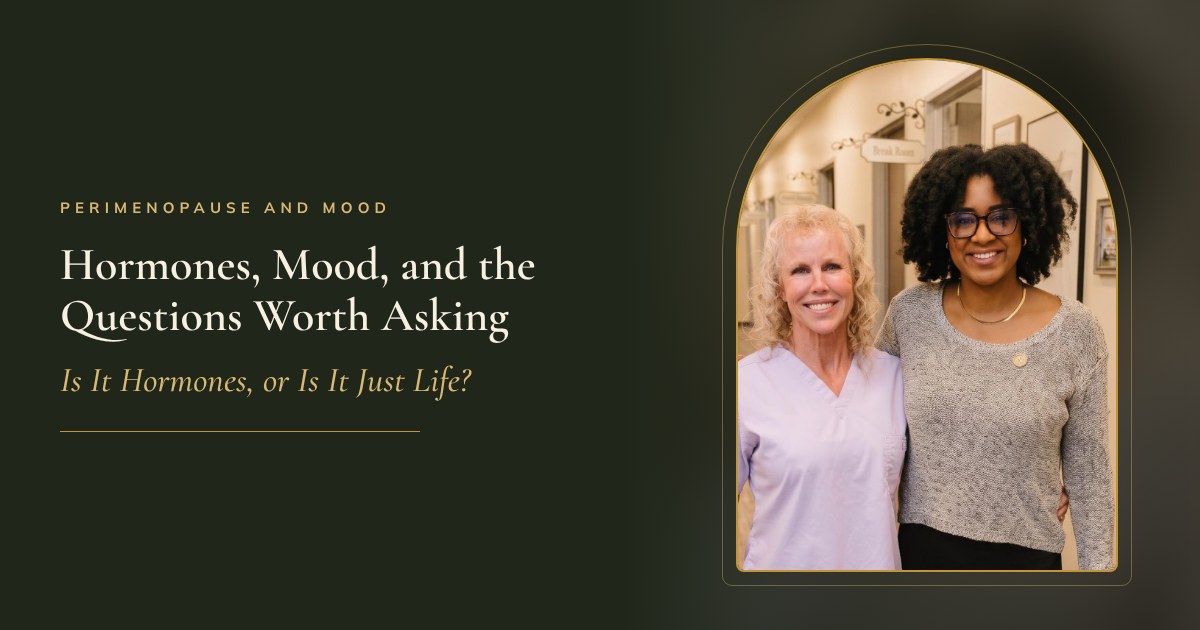

From restless nights and changing moods to hormone therapy and emerging treatments, Dr. Julia Ward shares her perspective on navigating midlife and taking a more comprehensive approach to women's health.
There comes a point in many women's lives when things begin to feel a little different.
Maybe you're waking up at 3 a.m. for no apparent reason. Perhaps you're more irritable than usual, struggling to concentrate, or noticing that your body doesn't respond to exercise and healthy eating quite the way it used to.
Is it stress? Poor sleep? Hormones? Or some combination of all three?
For women approaching their 40s and 50s, these questions can become increasingly familiar. The challenge is that hormonal changes don't happen in isolation. They occur alongside careers, family responsibilities, changing relationships, and the everyday demands of life.
I recently sat down with Dr. Julia Ward, a functional medicine physician and owner of Balanced Body Functional Medicine in Sugar Land, Texas, to talk about what women experience during perimenopause and menopause, how lifestyle factors into their health, and some of the treatment options available.
Our conversation covered everything from hormone replacement therapy and supplements to treatments that are generating increasing interest, including hyperbaric oxygen therapy and peptides.
One theme kept coming up: understanding your health requires looking at more than any single symptom.
The answer
A woman experiencing irritability, difficulty concentrating, fatigue, or anxiety may be dealing with several contributing factors at once. Hormonal changes may be part of that picture, but so might disrupted sleep, work demands, caregiving responsibilities, or an underlying medical or psychiatric condition. Rather than assuming hormones are responsible for everything, a thoughtful evaluation considers what else might be happening.
Whether you're noticing changes in your mood, sleep, energy, or physical health, those symptoms are worth discussing.
Dr. McDade cares for mood and anxiety around perimenopause by secure video across Texas, and every visit is with her. She prescribes no hormonal treatment of any kind, and hormone care stays with your OB-GYN or primary care clinician.
Is It Hormones, or Is It Just Life?
One of the most frustrating aspects of perimenopause is how difficult it can be to distinguish hormonal changes from everything else happening in your life.
“It is hard to tell sometimes,” Dr. Ward acknowledged. “Is this stress-related, or am I starting to go through a change? Your stress levels can even affect whether you’re having a period or not.”
And the symptoms aren't always what women expect.
We tend to associate menopause with hot flashes and night sweats, but those are only part of the picture. Some women first notice changes in their sleep. Others experience fatigue, mood changes, difficulty concentrating, or shifts in their menstrual cycles.
“For some people, it’s fatigue. Other people, it’s not sleeping. For others, it’s mood disorders,” Dr. Ward explained.
Family history can offer useful clues. If your mother experienced menopause relatively early or late, that information may help provide context for your own experience. Genetics play a role in the timing of menopause, although they don't determine exactly when it will occur.
Dr. Ward also considers medical history and laboratory testing when evaluating patients. While testing can help identify other conditions contributing to symptoms, perimenopause is often diagnosed primarily through a woman's age, symptoms, and menstrual history rather than a single hormone level.
The larger point is that symptoms deserve attention, even when their cause isn't immediately obvious.
Your Skin, Hair, and Body May Be Telling You Something
Changes in hair texture, thinning hair, dry skin, and shifts in body composition can also become more noticeable during midlife.
Dr. Ward often considers oxidative stress when evaluating these concerns, but she also looks for other medical explanations.
That's an important distinction. Not every change during your 40s or 50s is necessarily caused by declining estrogen.
Thyroid disorders, nutritional deficiencies, medications, and other health conditions can contribute to symptoms that resemble those of perimenopause.
Rather than assuming hormones are responsible for everything, a thoughtful evaluation considers what else might be happening.
Why Your Health Before Menopause Matters
One of Dr. Ward's strongest convictions is that the habits women establish before and during menopause can influence how they experience the transition.
“The healthier you are, the less you may feel the changes of menopause,” she said.
Her explanation centers on the idea of having enough physical and emotional reserves to manage the changes taking place.
When someone is already dealing with chronic stress, inadequate sleep, poor nutrition, or limited physical activity, additional hormonal changes may feel especially disruptive.
“You’re going to feel that decrease more when you’re already in an unhealthy state, because the hormones were propping you up and now that’s gone,” she explained.
Her advice isn't about achieving perfect health before menopause. It's about recognizing that everyday habits can make a meaningful difference in how we feel.
Regular movement, balanced nutrition, adequate sleep, and opportunities to recover from stress support health at every age. During midlife, those habits may become even more valuable.
Of course, a healthy lifestyle doesn't guarantee an easy menopause transition. Women who exercise regularly, eat well, and manage stress can still experience significant symptoms that warrant treatment.
The Stress Connection: When Your Body Doesn't Get a Chance to Recover
Stress was another recurring theme in our conversation.
Dr. Ward described a patient population that will sound familiar to many women: busy working mothers whose children are finally becoming more independent.
After years of balancing careers, households, and parenting responsibilities, they may finally have more time to focus on themselves.
“This is a mom who finally has time to put into herself, but now she’s going through changes,” she said.
The timing can feel particularly unfair.
Chronic stress can affect sleep, concentration, mood, and overall well-being. It can also influence menstrual cycles, making it more difficult to determine which symptoms are related to stress and which may be part of the menopausal transition.
“If you’re constantly stressing yourself, you don’t have time to recover, and that’s going to affect every other system in your body,” Dr. Ward explained.
In her practice, she sometimes uses saliva or dried urine testing to evaluate cortisol patterns. These approaches are used in some functional medicine settings, although they are not routinely recommended for evaluating everyday stress or diagnosing perimenopause.
What interested me most was her emphasis on creating opportunities for recovery.
Dr. Ward encourages patients to incorporate relaxation techniques and practices she refers to as “vagal toning,” which are intended to support the body's relaxation response.
These might include breathing exercises, meditation, or other activities that help someone slow down.
“You can work on the hormones and the gut health and the biochemistry all you want,” she said, “but if the mindset isn’t right, they’re not going to really make progress.”
While mindset alone cannot resolve hormonal symptoms or medical conditions, psychological well-being is an important part of overall health.
Sometimes, the question isn't simply whether your hormones are changing. It's also whether your daily routine leaves enough room for rest and recovery.
You answer everyone else's questions. Yours deserve a physician who listens.
Find Care That Understands MeHormone Replacement Therapy: When Should Women Start Thinking About It?
Hormone therapy is one of the most discussed—and sometimes misunderstood—topics in menopause care.
Some women are eager to explore it. Others are hesitant because of concerns about breast cancer, cardiovascular disease, or other potential risks.
Dr. Ward takes a proactive approach.
“I personally think so, because I think prevention is better than trying to treat symptoms after the fact,” she said when asked whether women should consider hormone replacement therapy during perimenopause.
She compared the approach to maintaining warmth rather than waiting until you're cold and trying to warm up again.
“It’s going to be easier on the body if you have a nice, smooth transition.”
Her perspective reflects a preference for discussing hormone therapy early rather than waiting until symptoms become especially disruptive.
However, hormone therapy isn't necessary or appropriate for every woman. Current medical guidance generally recommends considering systemic menopausal hormone therapy based on symptoms, medical history, individual risks, and treatment goals—not prescribing it routinely to prevent future symptoms or chronic disease.
For appropriately selected women, hormone therapy is among the most effective treatments for bothersome hot flashes and night sweats. It may also improve sleep when nighttime symptoms are contributing to frequent awakenings.
The type of medication, dose, route of administration, and whether progesterone is needed all depend on the individual.
Dr. Ward emphasized the importance of choosing the right formulation and dosing treatment appropriately.
The takeaway isn't that every woman should start hormones. It's that women deserve an informed conversation about their options.
What About Progesterone and Sleep?
Sleep difficulties are among the complaints women frequently bring up during perimenopause.
Some find themselves waking in the middle of the night, while others struggle to fall asleep despite feeling exhausted.
Progesterone levels can fluctuate as ovulation becomes less predictable during perimenopause. Dr. Ward believes these changes can contribute to sleep disturbances in some women.
“Sometimes just giving a little progesterone at night can help with both the sleep and the weight issue,” she said.
She prefers oral progesterone in certain situations because of its sedating effects.
“Because it gives you that sort of sleepy feeling, so it adds to a good night’s sleep.”
There is some evidence that oral micronized progesterone may improve certain sleep outcomes, although the findings vary and it isn't an established weight-loss treatment.
Sleep problems also have many possible causes, including anxiety, sleep apnea, medications, and nighttime hot flashes.
For women experiencing persistent sleep changes, identifying the underlying cause is an important first step.
Can Supplements Help Balance Hormones?
Walk into almost any pharmacy or browse social media for a few minutes, and you'll find products promising to balance hormones, improve energy, support metabolism, or ease menopause symptoms.
But which ones are actually worth considering?
Dr. Ward's answer was straightforward: “It depends on what the issue is.”
In her practice, she sometimes considers chasteberry for menstrual cycle concerns and supplements intended to support estrogen metabolism in patients with conditions such as PCOS or endometriosis.
She also discussed nutrients and supplements including vitamin D, fish oil, magnesium, probiotics, and iodine.
The evidence supporting these products varies considerably. Some may be helpful for specific deficiencies or medical conditions, but they are not universally necessary, and many supplements marketed for hormone balance lack strong clinical evidence.
Iodine, for example, is essential for thyroid function, but excessive intake can contribute to thyroid problems. Other supplements may interact with medications or be inappropriate for certain conditions.
Dr. Ward also cautioned against overwhelming patients with complicated supplement regimens.
“If you send somebody home with 20 supplements, are they even going to take them? And do you know which one is working?”
It's a practical question.
When multiple products are started simultaneously, it can be difficult to determine which, if any, are making a difference.
And despite the attention supplements receive, Dr. Ward returned to a much simpler message.
“You cannot supplement your way out of a bad diet or not exercising.”
Let's Talk About Bladder Leaks and Sexual Health
Some of the most common concerns women experience as they age are also the ones they may feel least comfortable discussing.
Urinary leakage is one of them.
Whether it happens while laughing, coughing, exercising, or jumping, stress urinary incontinence can interfere with everyday activities and quality of life.
Yet many women assume it's simply an unavoidable part of aging or childbirth.
Dr. Ward discussed a treatment offered in her practice called the O-Shot, which uses platelet-rich plasma, or PRP, prepared from a patient's own blood.
The procedure involves injecting PRP into tissues in the vaginal and clitoral region, with the goal of improving certain sexual or urinary symptoms.
Dr. Ward described the treatment as creating something similar to a “liquid bladder sling,” although this is her analogy rather than an established description of how PRP works.
She shared her own experience with urinary leakage during bodybuilding workouts.
“Once I got the O-Shot, it just stopped it,” she said.
She has also observed improvements in sexual arousal among some patients, although she acknowledged that results vary.
It's important to distinguish those individual experiences from established evidence. PRP injections for urinary incontinence or sexual dysfunction remain investigational, and there is not yet sufficient high-quality evidence to establish their effectiveness or long-term safety for these uses.
Women experiencing bladder leakage do have evidence-based treatment options, including pelvic floor physical therapy, behavioral interventions, pessaries, and, when appropriate, surgical procedures.
The most important message is that urinary leakage is common, but women don't have to accept it without exploring treatment.
Hyperbaric Oxygen Therapy: An Established Treatment With Emerging Applications
Another treatment available at Dr. Ward's practice is hyperbaric oxygen therapy.
The concept is relatively straightforward. A patient enters a pressurized chamber and breathes oxygen at pressures higher than normal atmospheric pressure.
This allows more oxygen to dissolve into the bloodstream and reach body tissues.
Hyperbaric oxygen therapy has established medical uses, including certain difficult-to-heal wounds, radiation-related tissue injuries, and decompression sickness.
Dr. Ward's chambers operate at approximately 2 to 2.4 atmospheres of pressure.
She believes increased oxygen delivery may support healing in other areas of the body as well, including the brain and gastrointestinal system.
She also emphasized that treatment typically involves multiple sessions rather than a single visit.
“The effects build on themselves. It’s not meant to be a one-and-done,” she explained.
In her practice, she discussed protocols involving approximately 40 sessions for some conditions, as well as shorter courses around certain surgical procedures.
While hyperbaric oxygen therapy has demonstrated benefits for specific medical conditions, many of its newer applications remain under investigation. Evidence is not yet sufficient to recommend it routinely for PTSD, general cognitive enhancement, or recovery from uncomplicated elective surgery.
Dr. Ward also described her practice's involvement with an organization that helps veterans with blast injuries or PTSD access treatment without charge.
For patients considering hyperbaric therapy, the specific diagnosis, strength of supporting evidence, potential risks, and cost are important considerations.
Peptides: Promising Possibilities, but Plenty of Questions
Peptides have become increasingly popular in conversations about longevity, recovery, weight management, and wellness.
These compounds are made from chains of amino acids, and some peptide-based medications have well-established medical uses.
But the growing wellness market includes many products that have not undergone the same rigorous evaluation.
Dr. Ward discussed commonly used peptides, including products intended to influence growth hormone signaling and combinations marketed for tissue repair.
One example is the so-called “Wolverine” combination of BPC-157 and TB-500.
These substances are promoted for healing and recovery, but their safety and effectiveness in humans have not been adequately established. They are not FDA-approved treatments for those purposes.
Dr. Ward's greatest concern is where patients obtain these products.
“You can get them online, and you don’t know what you’re injecting into your body,” she cautioned.
Products purchased through unregulated sources may have uncertain purity, dosing, or ingredients.
Even when discussing these emerging therapies, Dr. Ward was careful to emphasize that they should not replace the foundations of health.
“They’re like the icing on the cake. They’re not the cake.”
And, as she put it, “You can’t peptide your way out of a bad diet or not exercising.”
Looking at the Bigger Picture
What stood out to me throughout this conversation was how often we returned to the relationship between physical health, emotional well-being, and the demands of everyday life.
As a psychiatrist, I frequently see how sleep, stress, hormonal changes, and mental health symptoms can overlap.
A woman experiencing irritability, difficulty concentrating, fatigue, or anxiety may be dealing with several contributing factors at once. Hormonal changes may be part of that picture, but so might disrupted sleep, work demands, caregiving responsibilities, or an underlying medical or psychiatric condition.
Understanding that context matters.
It also reinforces why collaboration between medical specialties can be so valuable. A woman's gynecologist, primary care physician, psychiatrist, and other clinicians may each bring a different perspective to symptoms that don't fit neatly into one category.
Our conversation also highlighted the importance of approaching newer treatments with both curiosity and appropriate skepticism.
Some therapies have decades of research supporting their use. Others are still being studied, and enthusiasm should not be mistaken for proof of effectiveness.
Women deserve to understand that distinction so they can make informed decisions about their health.
- 01Hormone therapy
ForBothersome hot flashes and night sweatsWhere the evidence standsAmong the most effective treatments
For appropriately selected women - 02Oral micronized progesterone
ForCertain sleep outcomesWhere the evidence standsSome evidence
Although the findings vary
It isn't an established weight-loss treatment - 03Supplements
ForHormone balanceWhere the evidence standsVaries considerably
Many supplements marketed for hormone balance lack strong clinical evidence - 04Pelvic floor physical therapy, behavioral interventions, pessaries, and, when appropriate, surgical procedures
ForBladder leakageWhere the evidence standsEvidence-based treatment options
- 05PRP injections
ForUrinary incontinence or sexual dysfunctionWhere the evidence standsRemain investigational
- 06Hyperbaric oxygen therapy
ForCertain difficult-to-heal wounds, radiation-related tissue injuries, and decompression sicknessWhere the evidence standsEstablished medical uses
- 07Hyperbaric oxygen therapy
ForPTSD, general cognitive enhancement, or recovery from uncomplicated elective surgeryWhere the evidence standsEvidence is not yet sufficient to recommend it routinely
- 08BPC-157 and TB-500
ForHealing and recoveryWhere the evidence standsSafety and effectiveness in humans have not been adequately established
They are not FDA-approved treatments for those purposes
Perhaps the most useful takeaway from my conversation with Dr. Ward is that midlife changes deserve more than a quick explanation or an assumption that they're simply part of getting older.
Whether you're noticing changes in your mood, sleep, energy, or physical health, those symptoms are worth discussing.
You don't need to have all the answers before starting the conversation.
Sometimes, knowing which questions to ask is the most important first step.
If you need help now
If you are in crisis or thinking about suicide, call or text 988 or chat at 988lifeline.org to reach the 988 Suicide and Crisis Lifeline. If you are Deaf or hard of hearing, use your preferred relay service or dial 711, then 988. In an emergency, call 911 or go to the nearest emergency room. This practice does not provide emergency services.
Dr. Allison J. McDade, MD, is board certified by the American Board of Psychiatry and Neurology in psychiatry and in child and adolescent psychiatry, and she is the founder of Health & Harmony Psychiatry. More about Dr. McDade.
What happens after you reach out?
Here is each step, from the first call to your first follow-up.
- 01
Online or phone
You reach out
Book on the booking page, or call 832.387.6088.
- 02
Before the visit
A brief screening
A brief screening first confirms that telepsychiatry fits your needs.
- 03
Patient portal
Intake in the portal
You'll complete a few intake forms in the patient portal, then meet with Dr. McDade for a full evaluation.
- 04
Unhurried
Your first evaluation
Dr. McDade hears your story and reviews your history and your health, over 60 to 90 minutes. Understanding relies on context, and some stories need more time.
- 05
Collaborative
A plan built with you
You and Dr. McDade discuss each option in depth. When therapy is the better starting point, she refers to therapists she knows well.
- 06
Steady
Follow-up with Dr. McDade
Follow-up visits run 15 to 30 minutes by secure video.
The psychiatric evaluation page explains what the first visit covers, and the telepsychiatry page explains how video visits work.
Your story comes first.
Questions about perimenopause, mood, and treatment
How is perimenopause diagnosed?
While testing can help identify other conditions contributing to symptoms, perimenopause is often diagnosed primarily through a woman's age, symptoms, and menstrual history rather than a single hormone level. The larger point is that symptoms deserve attention, even when their cause isn't immediately obvious.
What are the first signs of perimenopause?
We tend to associate menopause with hot flashes and night sweats, but those are only part of the picture. Some women first notice changes in their sleep. Others experience fatigue, mood changes, difficulty concentrating, or shifts in their menstrual cycles.
Can other conditions look like perimenopause?
Thyroid disorders, nutritional deficiencies, medications, and other health conditions can contribute to symptoms that resemble those of perimenopause. Rather than assuming hormones are responsible for everything, a thoughtful evaluation considers what else might be happening.
Is hormone therapy right for every woman?
For appropriately selected women, hormone therapy is among the most effective treatments for bothersome hot flashes and night sweats. The type of medication, dose, route of administration, and whether progesterone is needed all depend on the individual. The takeaway isn't that every woman should start hormones. It's that women deserve an informed conversation about their options.
Why can sleep change during perimenopause?
Progesterone levels can fluctuate as ovulation becomes less predictable during perimenopause. Sleep problems also have many possible causes, including anxiety, sleep apnea, medications, and nighttime hot flashes. For women experiencing persistent sleep changes, identifying the underlying cause is an important first step.
Do supplements help balance hormones?
The evidence supporting these products varies considerably. Some may be helpful for specific deficiencies or medical conditions, but they are not universally necessary, and many supplements marketed for hormone balance lack strong clinical evidence. Iodine, for example, is essential for thyroid function, but excessive intake can contribute to thyroid problems. Other supplements may interact with medications or be inappropriate for certain conditions.
What helps with bladder leaks?
Women experiencing bladder leakage do have evidence-based treatment options, including pelvic floor physical therapy, behavioral interventions, pessaries, and, when appropriate, surgical procedures. The most important message is that urinary leakage is common, but women don't have to accept it without exploring treatment.
What is hyperbaric oxygen therapy used for?
Hyperbaric oxygen therapy has established medical uses, including certain difficult-to-heal wounds, radiation-related tissue injuries, and decompression sickness. While hyperbaric oxygen therapy has demonstrated benefits for specific medical conditions, many of its newer applications remain under investigation. Evidence is not yet sufficient to recommend it routinely for PTSD, general cognitive enhancement, or recovery from uncomplicated elective surgery.
Are peptides like BPC-157 safe?
These substances are promoted for healing and recovery, but their safety and effectiveness in humans have not been adequately established. They are not FDA-approved treatments for those purposes. Products purchased through unregulated sources may have uncertain purity, dosing, or ingredients.
Does Dr. McDade prescribe hormone therapy?
No. Dr. McDade prescribes no hormonal treatment of any kind. She cares for mood and anxiety, and hormone care stays with your OB-GYN or primary care clinician.
Is this an emergency service?
No. Health & Harmony Psychiatry does not provide emergency care. If you are in crisis or thinking about harming yourself, call or text 988, or call 911.
Sources for the research this post describes.
- The 2022 hormone therapy position statement of The North American Menopause Society, Menopause, 2022
- Hormone Therapy in Postmenopausal Persons, Primary Prevention of Chronic Conditions, US Preventive Services Task Force, November 1, 2022
- What doctors want patients to know about perimenopause, American Medical Association, October 30, 2026
- Oral micronized progesterone for perimenopausal night sweats and hot flushes a Phase III Canada-wide randomized placebo-controlled 4 month trial, Prior and others, Scientific Reports, 2023
- Iodine, Fact Sheet for Consumers, NIH Office of Dietary Supplements, updated July 28, 2022
- Treatments for Bladder Control Problems (Urinary Incontinence), National Institute of Diabetes and Digestive and Kidney Diseases, reviewed July 2021
- Efficacy and Safety of Platelet-Rich Plasma Injections for the Treatment of Female Sexual Dysfunction and Stress Urinary Incontinence, A Systematic Review, Dankova and others, Biomedicines, 2023
- Hyperbaric oxygen therapy, MedlinePlus Medical Encyclopedia, reviewed August 19, 2024
- Certain Bulk Drug Substances for Use in Compounding that May Present Significant Safety Risks, US Food and Drug Administration, content current as of April 22, 2026
The information on this website is for general education and does not constitute medical advice or create a physician-patient relationship. For care, please schedule an appointment.
Care Through Connection
You don't need to have all the answers before starting the conversation.
Book the first visit online, or call 832.387.6088 with questions. A parent or guardian books for anyone under 18, and a brief screening confirms fit before your first visit.
Health & Harmony Psychiatry does not provide emergency care. If you are in crisis or thinking about harming yourself, call or text 988, or call 911. Ages 6 to 70. Health & Harmony Psychiatry provides care by secure video to patients physically located in Texas at the time of their appointment.